This has grown out of my loving rowing and sculling.
I had a bad car crash in 1998 and was told that I would never be competitive in rowing again, due to all the broken bones and damage to my lungs (and rowing being an oxygen deprivation sport). I took up yoga to stop back spasms. I then took up coaching, teaching and took over a school rowing program in London. The school rowing program had never done well. Indeed I was told they had never won a race and the year before I started and took them over, they had come absolute last in the school head race. I applied what I was learning from yoga about posture, breathing, core engagement and movement. Soon the school was winning races and the final crew/squad I coached, became the first state school program crew to win First Eights at the British National Schools Regatta. They had many other wonderful performances, but after sixteen years of teaching in the secondary sector, I needed a change and went to train as a yoga teacher in Austria and then India. I then set up the training venue in Bergerac. The original plan was to have two of my ex pupils who had gone on to row for England after university running it and I would drop in to join them from time to time, with the coaching and run yoga sessions. Brexit and then Covid-19 changed our plans and now it is basically just a house where people come and train and get coached, with me running most of the weeks (one of these ex pupils is now a full-time coach in England and for the last few years also runs a few weeks with me in the mid-summer). We adjust the program to the individuals who come, as we are full when three rooms are booked. This page gives you a general flavour of the themes you will find if you come and join us for a session or two… or more!
Sculling with yoga: balance on land and water
An activity based performance-development course designed to build a foundation of technique, awareness and balance through a process of assessment, learning and practice.
Here are some notes on our Sculling with Yoga concept, in theory and in practice. We hope it will give you an understanding of why our teaching is the way it is, and what to expect if you sign up for a course.
Don’t be put off by the number and extent of sessions described below: there’s no obligation to attend them all. If you prefer to spend your afternoons out cycling or playing tennis, that’s fine. But we do recommend that you aim to complete at least 14 hours of supervised activity during a five night stay if you want to see a measurable effect on your performance.
If you’re highly motivated (perhaps you have a race coming up that you really want to win) then you’ll want to participate in the full programme, and more. That’s OK too: there will be opportunities for extra coaching sessions, group or individual. And you’ll be able to go on unsupervised river outings, as long as you’re not a beginner and can steer and check your location and path competently.
The Theory
- Complementary disciplines. Combining rowing with yoga and cycling provides a strong and effective base for skill development.
- A flexible schedule. With a small group, it’s possible to vary the programme to suit individual needs.
- Finding Balance. Special attention is given to finding the right balance between physical exertion, nutrition, active recovery and rest.
- Strength & technique. We aim to show how power can be more effectively used to improve performance without additional effort.
The Metrics:
For those wanting to objectively measure the improvement of their sculling and develop a detailed understanding of their own stroke, we can help with this. Some just want to be an efficient sculler and are not interested in what power they apply, others want to “hit their potential” . Either way, we can help with this…
What strategy, technique and rig is best for me? The answer depends on many variables including your build, height, strength. The beautiful thing is that now we can measure and adjust almost everything to suit you and your sculling/rowing objectives.
We can also just enjoy our sculling and this is our ultimate objective: to help you enjoy sculling as efficiently as you want to.
- Where to start. Basic individual metrics – height, weight, reach etc. – along with your span, length of oar with correct inboard length and make sure we have the effective arc for you.
- What to measure. Whatever is relevant: force-curve data on the water. Port vs Starboard. Posture at catch and finish, and how this changes slip and wash; heart-rate and power (power to pulse ratio is a fun measure to compare your settings (can you achieve more power at around the same effort by actually making your gearing lighter… ? Some (indeed many) people can!); drive-time (how quickly are you getting those legs down?) and rhythm; where in the stroke are you applying the most power? Is this where you want to be doing it? We were the first people in Europe to get the new XBoat telemetry system and would love to use it with you and help you understand the data. We used the amazing Peach system last year and before that the NK Empower gates (and still have two of these to sell, if you are interested (please contact us on the contact page).
- Interpreting the data. Working with templates; graphs; peer-comparison; video and photo analysis – we have some innovative analytic options for the data you generate. We examine, adjust and measure again on the water. We learn more than theory: we actively study your stroke to understand, respond/adjust, improve, practice and measure again; repeat. This is theory in action, and it is great! Friends joke that I am always searching for marginal gains, but then the scullers among them join in, get faster and want more!
The Setup
- Your boat. Set-up basics: get to know what is right for you – relative height of feet, gates, seat; interaction of angles (arc, pitch, posture, reach, catch and finish angles).
- Body & mind. Breathing, flexibility, balance, visualisation, space, connections and awareness: we treat yoga as part of the setup and maintenance procedure for your sculling, with a view to making practice more comfortable, sustainable and effective.
The Yoga

Our specialist course will have both Functional Mobility sessions with Rita and Yoga Flow classes with Ali and other teachers. A basic pre-sculling warm-up yoga session will be held most mornings. We also run the occasional workshop looking at specific poses (such as handstands, headstands or breathing) and links to sculling technique. We also have a block where we focus on the breath and have a morning meditation session before sculling, and focus on breathing during the stroke. These are very useful sessions and we have two a year.
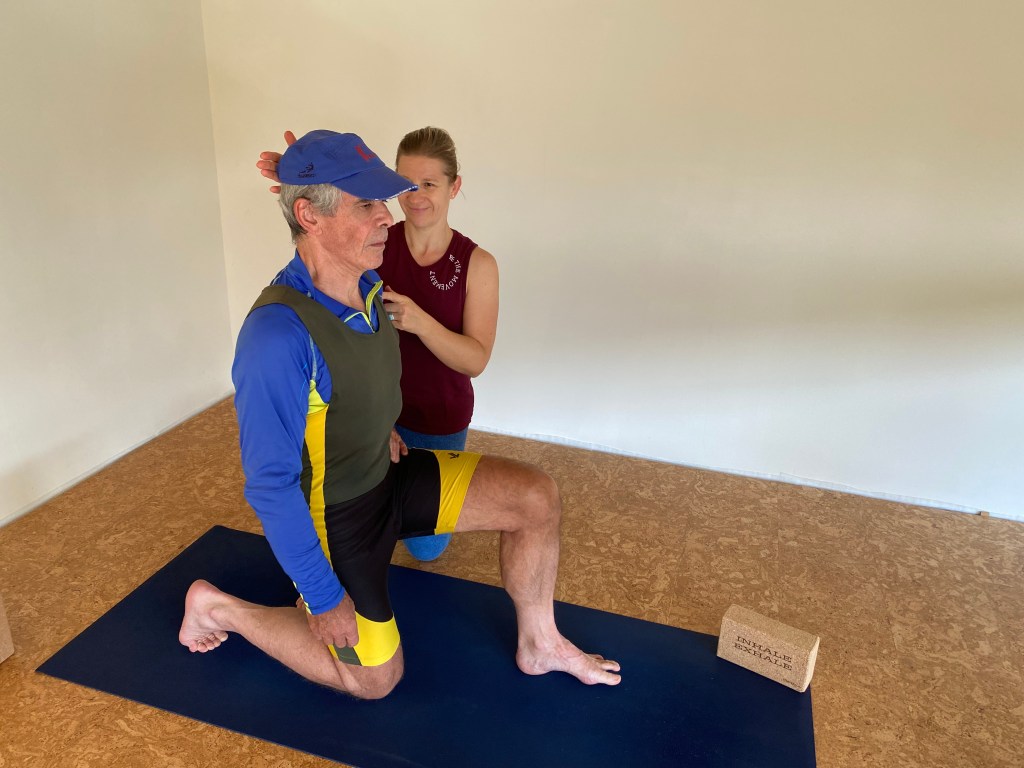
The yoga sessions also target breathing but will also look at balance, relaxation, and awareness of the necessary ranges of movement. We will be exploring our flexibility, strength and sculling using yoga, while working to reduce the chance of injury and enhancing the recovery process. The functional mobility with Rita looks at movement and how to avoid injuries through fixing weakness or imbalance in the muscle groups.
We analyse and explore many aspects of yoga and your movement, and how these can be applied to our training, practice and progress in sculling. This is not just about stretching and warm-up sessions: it’s something else altogether – an objective-driven yoga and mobility program with a lot of sculling included!
The Functional mobility
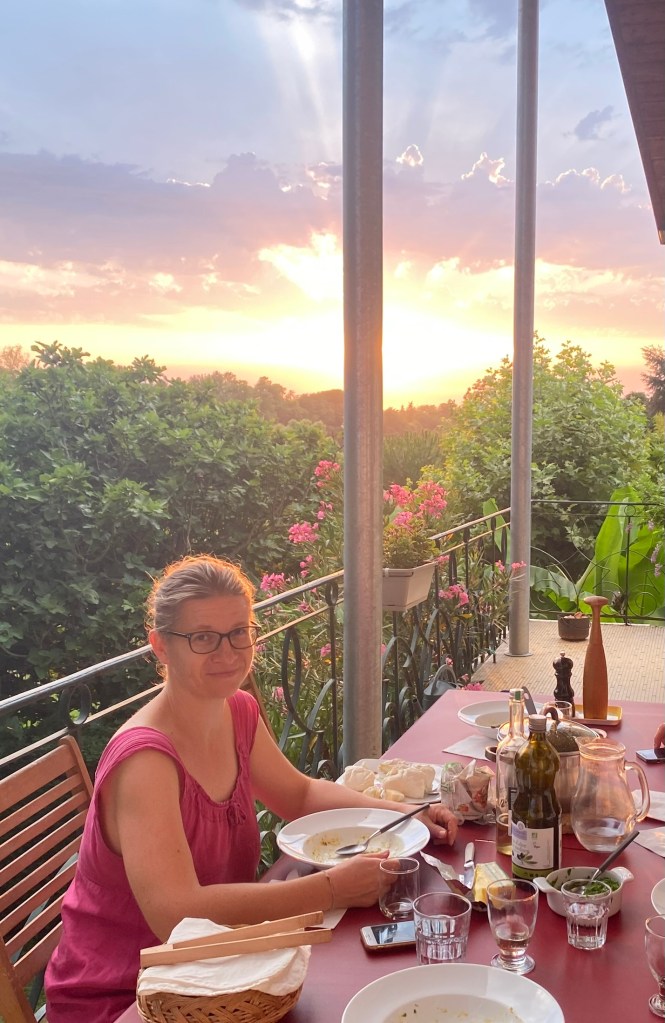
Rita’s sessions cover more than just glute activation, movement and balance of other key muscle groups and awareness development,. She works to help us achieve our sculling goals through checking for and then working on any imbalance or weakness. The work done with Rita can be seen on the water with stronger and better connection, better posture, and overall enhanced “proprioceptive” (the awareness of the body in space) skills. Rita is an all-round functional mobility and applied neurology teacher (500hr), with over a decade of experience in this and is currently based in Bergerac. She is also a first rate cook. Clients, even the non vegetarians, have been loving the wholesome and delicious mainly Ayurveda and Ottolenghi-insipred food provided during the camps.
Rita, functional mobility coach and chef, on the porch
Rita with high-performance masters sculler Mark Alloway
The programme in practice
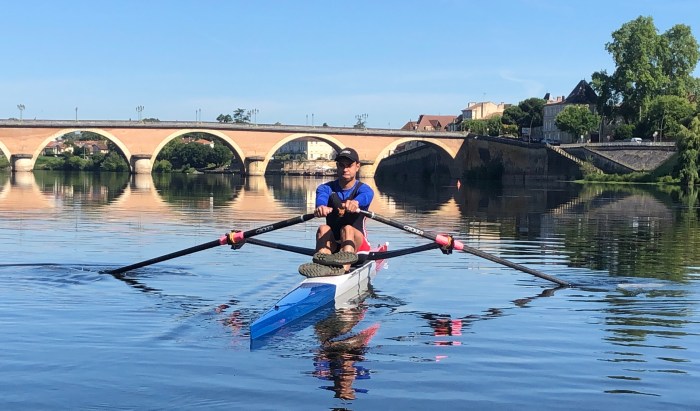
- On the water. At least two supervised sculling outings per day.
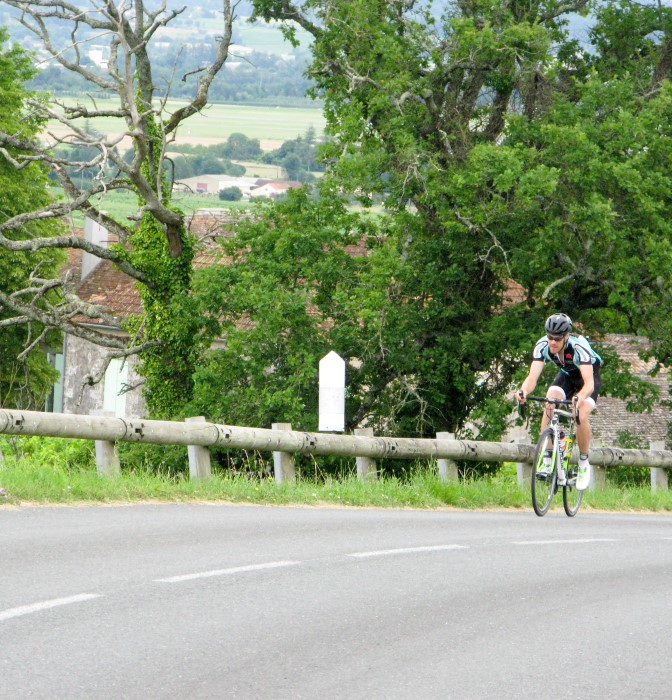
- On the road. Optional cycling, often after sculling.
- On the mat. yoga and mobility sessions on most days.
- In the classroom. At least three analysis sessions per week.
- At the table. Nutritionally appropriate meals from fresh local produce
- The coaches. All qualified and experienced professionals.

A typical day’s schedule
| Time | Event | Location |
| 6.30 | Morning Mobilisation Yoga | Yoga Studio |
| 7.30 | Quick Breakfast | Dining room |
| 8:00 | Morning Loop – On the water | Boathouse |
| 9:30 | Off water – wash boats & change | Back lawn & rooms |
| 10:00 | Full breakfast | Dining room |
| 10.45 | Technical paddle | River |
| 12:00~16:30 | LUNCH then Rest period followed by video analysis | Dining room then anywhere; then classroom for video feedback |
| 16:30 | Tea | Terrace |
| 17.00 | Funcitonal Mobility with Rita or Yoga Flow, Cycle or water session | Yoga room, river, road |
| 19.30 | Dinner | Dining room |
| 21:30 | Bedtime | Bedtime |
What will you get out of this?
We hope that you get as much out of coming to ChezB as others have, and that we can help you further develop your understanding and enjoyment of your sculling stroke. Here is what a few people have said about their experiences here; please click on the link below (to be added soon) for more:
Testimonials
“I’ve just returned from a week’s traiing camp with Ali. As as an ex-GB Olympic rower asnd GB age-group triathlete I have been on many trainiing camps in different locations around the world. This certainly has to be ranked as one fo the best! The proximity to the river is fantastic – I was out from breakfast and on the river each morning in less than 5 minutes! The river is wide, pan-flat and with no traffic. In addition to this, you can row for 10km in one direction…”
Toby Garbett, double World Champion rower.

Toby in a 90kg Nelo, with Croker S39 blades & some morning mist!
Berend van Wachem, former Dutch National Rowing Team and coach, two time British National Masters winner of C1x, now professor of flow mechanics at Magdeberg University, Germany
“Great time with great coaching, good weather and good food. Lots of progress!! “

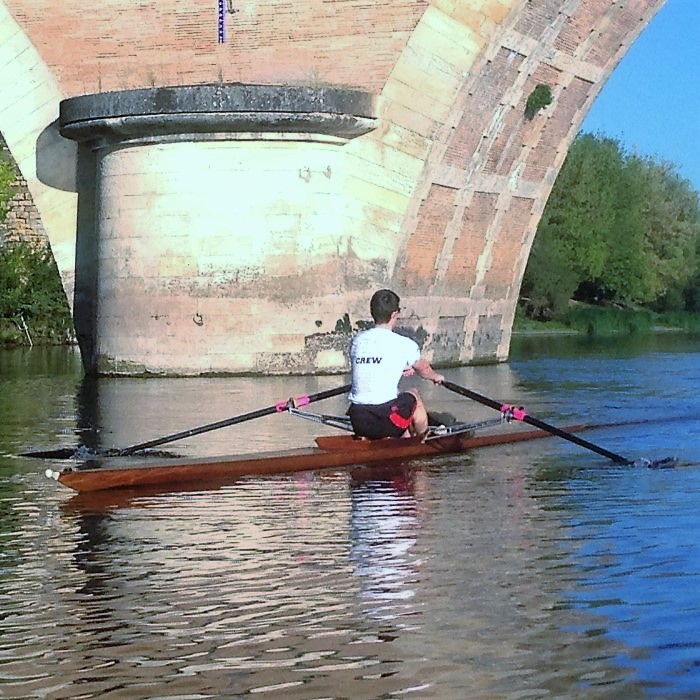
Berend on an early morning scull towards the Gustave Eiffel bridge in a 90kg Nelo with Croker S39 sculling blades
(the beautiful bridge (3km upstream from the house and currently just used by bikes and pedestrians) was built in 1878 and when they rolled it across the river it turned out to be 9cm too short!).
 Chez Boileau